The Great Depression of the 1930's stretched the
nation's private social welfare system almost to the breaking point. Volunteers
of America mobilized to assist the millions of people who were unemployed,
hungry and homeless. Relief efforts included employment bureaus, wood yards,
soup kitchens and "Penny Pantries" where every food item cost one
cent. The Volunteers of America in 1932 were
serving several hundred meals a week to school children at their food station
on Second Avenue Southeast. Children sent to the food station are selected from
various schools in Minot, according to Capt Richard Das. Volunteers
of America was founded in 1896 by social reformers Ballington and Maud Booth.
They envisioned a movement dedicated to “reaching and uplifting” the American
people. On behalf of the organization, the Booths pledged to “go wherever we
are needed, and do whatever comes to hand.” In turn-of-the-century America,
there was no shortage of work to do. The Volunteers moved into tenement
districts to care for people in poverty. They organized day nurseries and
summer camps, provided housing for single men and women, and established the
nation's first system of halfway houses for released prisoners.

Minot Memories is a blog that pertains to the city of Minot, ND. It is brief glimpses of people, places, things and events of Minot's past that will provide some insight into the history of Minot. This photo Main Street looking south from the railroad tracks about 1940
Thursday, October 9, 2014


Wednesday, October 8, 2014
Oak Park Theater
On Saturday, March 27th, 1976 the
Oak Park Theater was showing “The Hindenburg”, staring George C Scott and Anne
Bancroft. The Oak Park Theater also featured Saturday Matinees. This particular
Saturday the Matinee was “ The Phantom Toll Booth”. The theater ad stated:
“Mothers, take an hour and a half break and come along with your kids to see
this great show. They’ll drive you crazy but you will thoroughly enjoy the
show. All matinee seats – 75 cents. The upstairs of the theater also had a
separate for parents with small children to watch a movie without disturbing
the rest of the audience.
I also remember back in the late 60’s, the Oak Park Theater would have
all night shows on Saturday nights in the summer. The all night shows tended to get a bit rowdy causing the
theater to stop having them. The theater closed and became a pool hall for a
while and eventually returned as a theater prior to the 2011 flood

Tuesday, October 7, 2014
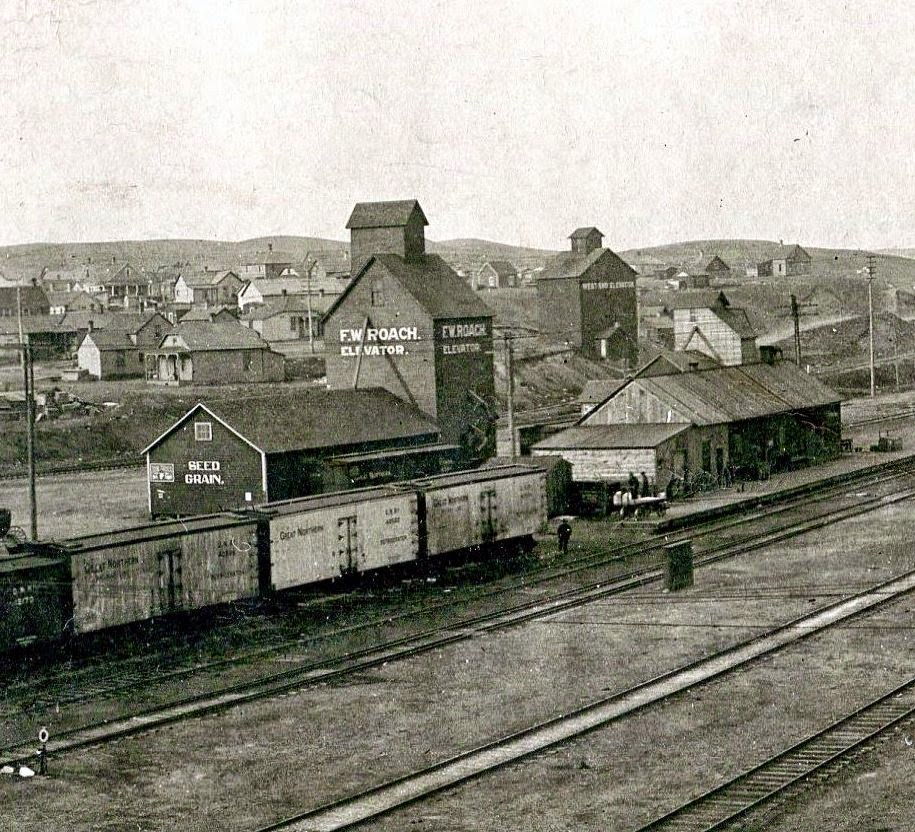
FW Roach Elevator
One of the first grain elevators was built and
managed by FW Roach. The earliest information I have is a picture from the
early 1900’s and the article in the Ward County Independent on Sept. 27, 1905
in which he stated … “When Marketing your
grain, visit the Roach Elevator and I feel certain you will be satisfied with
the treatment you receive. I can guarantee to give you price equal to any in
the state. I am determined as one grain man to make Minot the best marketing
point in the northwest. Remember the FW Roach Elevator near the Great Northern
Track in Minot.” Roach was also one
of the earlier land developers in the Minot downtown area.
Monday, October 6, 2014
Grow Clothing
Another business that was located on the north end of Main Street in
the early 1900’s was Grow Clothing. They were across the street from the
Dacotah Hotel ( about where the SOO Line Depot is now). In 1905 Grow Clothing
was holding a gopher tail contest. The reason was to help the farmers reduce
the gopher population that was damaging crops. The contest was open until July
3rd with prizes being awarded on July 4th. The winner
received a $20.00 suit of clothes. Anyone turning in over 100 gopher tails was
to receive a prize. In 1907 the business ran into hard times and in 1910 Grow
Clothing was Purchased by the Cohn Clothing Co. In 1916 the store was purchased
by MG Olson and became part of the Olson Men’s stores which had locations
throughout the state.
Friday, October 3, 2014
The Opera Barber Shop / Bath House
The Opera Barber Shop opened in May of 1904. The
owners were Gilder and Eckler (known as Eck). It was located in the basement of
the Jacobson Hardware Building which also house the Post Office, Union National
Bank and the Opera House. Reportedly the Barber Shop had 9 chairs and added a
Turkish Bath with two rooms. Initially the were a non-union barber shop and
were open 24 hours a day. Miss Mamie Olson was in charge of the Turkish baths
and Thursday was set aside for ladies, all day and all night. The Opera Barber
Shop was regarded as the best in the state and many claimed it was the finest
between Minneapolis and Seattle. The Turkish Bath was referred to as the “Hot
Springs of North Dakota”. By 1910 the Opera Bathhouse featured the Turkish
Baths and also Russian Baths as well as a plain bath. In 1910 Eckler sold the
Opera Barber shop to Sam Hanson, a well known barber who in turn sold it to AJ
Bartow in 1915. The Opera House barber shop flourished until 1923 when the
building was ravaged by fire. The barber shop and the opera house were not
rebuilt.

If you look closely at the picture you will see the Opera Barber Shop sign on the lower right corner of the building
Thursday, October 2, 2014
Astoria Barber Shop/ Bathhouse –
I have an undated picture of Main Street showing
the Astoria Barbershop and Bathhouse. It was owned by Mrs. L. Muhs. The
earliest reference I can find about the Astoria is in 1903. It was listed under
Minor Topics in the Ward County Independent. The Astoria Barber Shop was noted
for giving smooth shaves and up to date haircuts. The Bathhouse claimed the
shower bath was their specialty. In 1903 the Astoria added metal siding to the
building making it one of the warmest Bathhouses in the city. The Astoria was
said to have the “swellest” rooms in the Northwest. In 1904 the Astoria
featured special arrangements for the
ladies. They also installed a new Compress Air Vibrating Massage machine

Astoria Bath House in the middle left side of picture
Wednesday, October 1, 2014
Bath Houses
In the late 1800’s and early 1900’s Bathhouses were a common and popular
item. They were usually associated with barber shops but often were free
standing. Most tried to locate in the downtown areas and close to rail depots.
Many travelers when making stops in major cities would utilize the services of
the bath house. As hot water was scarce, especially in homes, many citizens
also frequented the bath houses… the bath houses were designed for the male
population but some provided special days for the ladies only. The next two days will be devoted to two of the larger bath houses/barber shops in early Minot.
Subscribe to:
Posts (Atom)